The Camel Saddle Revolution: Transforming the Backbone of Desert Trade

Jul 7, 2025 By

The vast deserts of Arabia and North Africa have long been traversed by caravans of camels, their silhouettes etched against the horizon like moving sculptures. For centuries, these "ships of the desert" carried precious cargo – spices, silks, and incense – along ancient trade routes. But what often goes unnoticed is the quiet revolution that transformed this trade: the evolution of camel saddles and harnesses. This unassuming technology became the backbone of desert commerce, reshaping economies and cultures across continents.

The Early Straggles: Balancing Loads on Humps

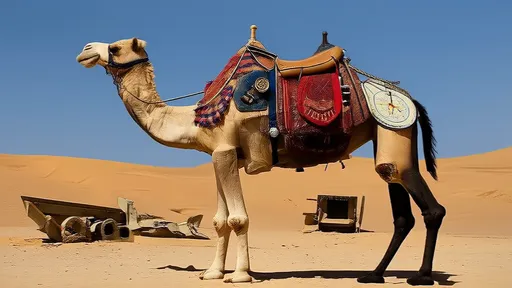
Early camel saddles were crude contraptions, little more than folded blankets or padded cushions tied haphazardly across the animal's back. Traders quickly realized that improper weight distribution caused painful sores on the camel's single hump, slowing caravans to a crawl. The solution emerged through trial and error – a wooden frame that straddled the hump rather than resting directly atop it. This simple innovation allowed loads to be suspended on either side, balancing the weight while protecting the camel's most vulnerable spot.

The Double-Hump Breakthrough

As trade routes expanded into Central Asia, encounters with two-humped Bactrian camels presented new challenges. Traditional Arabian saddles proved useless on these bulkier beasts. The response was a radical redesign – a massive wooden platform that spanned both humps, creating a stable base for enormous loads. This "platform saddle" could carry up to 600 pounds, transforming the scale of desert commerce. Suddenly, entire household goods could move with nomadic tribes, and bulk commodities like salt and textiles became viable trade items.

War and Commerce: The Military Saddle

No discussion of camel saddles would be complete without acknowledging their role in warfare. The development of the military saddle – with its high cantle and pommel – allowed warriors to wield swords and lances with unprecedented stability. This innovation spread rapidly along trade routes, often carried by the very merchants it was designed to protect. The line between commercial and military technology blurred as saddle designs incorporated elements from both worlds, creating hybrid models that served dual purposes.

The most sophisticated harness systems emerged where trade was thickest – the crossroads of the Silk Road. Here, saddles became status symbols, adorned with silver and semi-precious stones. More importantly, they incorporated intricate systems of ropes and pulleys that allowed single handlers to control entire strings of camels. This "master harness" technology effectively multiplied the carrying capacity of small trading groups, enabling them to compete with larger caravans.

The Gender Divide in Saddle Design

An often-overlooked aspect of saddle evolution was its gendered dimension. Women's saddles – used by nomadic tribes where women routinely handled camels – featured distinctive designs. Lower centers of gravity, extra handholds, and sometimes even small compartments for children reflected the different needs of female riders. These adaptations quietly revolutionized women's roles in desert trade, allowing them to participate more actively in economic activities.

The camel saddle's impact extended far beyond transportation. As designs improved, trade volumes increased, which in turn stimulated production at both ends of the routes. The saddle became a medium of cultural exchange – Arabian designs incorporated Chinese joinery techniques, while Persian models borrowed from African leatherworking traditions. This cross-pollination of ideas happened literally on the backs of the camels that carried them.

The Modern Paradox

Today, while trucks have replaced camels for most bulk transport, the saddle revolution continues in unexpected ways. Modern ergonomic designs help nomadic communities maintain traditional lifestyles, while high-tech versions assist in scientific expeditions across harsh terrain. The same principles developed centuries ago – weight distribution, comfort, and load security – now inform the design of everything from backpacks to helicopter sling loads.

The story of camel saddles reminds us that major historical transformations often ride in on humble innovations. What began as a solution to a simple problem – how to carry goods without hurting the camel – became the invisible infrastructure of transcontinental trade. The next time you see a camel in a documentary or museum, look closely at its saddle. That unassuming piece of equipment carried not just spices and silks, but the weight of empires on its wooden frame.

Recommend Posts
Animal

Guinea Pigs' Westward Journey: From Andean Sacrificial Offerings to European Pets

By /Jul 7, 2025

The journey of the guinea pig from the high Andes to European homes is a tale woven with cultural significance, colonial exchange, and unexpected transformations. These small, furry creatures, known scientifically as Cavia porcellus, have traversed continents and centuries, evolving from sacred sacrificial animals to beloved household pets. Their story is a testament to the complex interplay between human societies and the animals they domesticate.
Animal

Silk Code: The Legacy of Ancient Chinese Moth Domestication Technology

By /Jul 7, 2025

The ancient Chinese art of silkworm domestication stands as one of humanity's earliest and most remarkable feats of biological engineering. For over five millennia, Chinese sericulturists have perfected the delicate dance of coaxing Bombyx mori moths into producing the world's finest natural fiber. This extraordinary legacy, often called the "Silkworm Code," represents not merely an industrial process but a profound cultural symbiosis between humans and insects.
Animal

The History of Goldfish Breeding: From Red Scales to Bubble Eyes, A Millennium of Selection and Cultivation

By /Jul 7, 2025

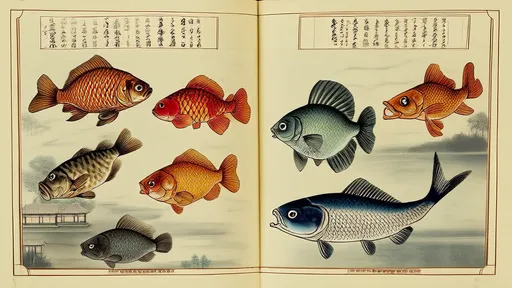
The shimmering dance of goldfish in ornamental ponds has captivated human imagination for over a millennium. What began as a humble genetic mutation in Prussian carp (Carassius gibelio) during China's Tang Dynasty (618-907 AD) blossomed into one of humanity's most enduring experiments in biological artistry. The journey from wild river dwellers to living sculptures with bubble-like eye sacs and flowing veiltails represents a fascinating intersection of cultural aesthetics, selective breeding, and biological plasticity.
Animal

The Camel Saddle Revolution: Transforming the Backbone of Desert Trade

By /Jul 7, 2025

The vast deserts of Arabia and North Africa have long been traversed by caravans of camels, their silhouettes etched against the horizon like moving sculptures. For centuries, these "ships of the desert" carried precious cargo – spices, silks, and incense – along ancient trade routes. But what often goes unnoticed is the quiet revolution that transformed this trade: the evolution of camel saddles and harnesses. This unassuming technology became the backbone of desert commerce, reshaping economies and cultures across continents.
Animal

The Origin of Domestic Chickens: The Global Domestication Journey of the Red Junglefowl

By /Jul 7, 2025

The story of the domestic chicken, a ubiquitous presence in farms and backyards worldwide, begins in the dense jungles of Southeast Asia. Its wild ancestor, the red junglefowl (Gallus gallus), still roams these forests today, a living testament to one of humanity’s most successful and far-reaching domestication journeys. From humble beginnings as a shy, ground-dwelling bird, the red junglefowl underwent a remarkable transformation, spreading across continents and cultures to become the cornerstone of global poultry production.
Animal

The Amazing Energy Miracle of Olms: Seven Years Without Food"

By /Jul 7, 2025

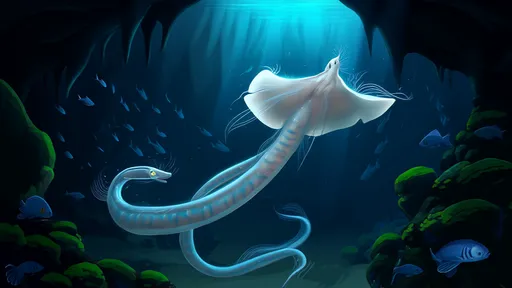
In the shadowy underwater caves of the Dinaric Alps, a pale, serpentine creature defies one of nature's most fundamental rules. The olm, or Proteus anguinus, has astonished biologists by surviving without food for up to seven years – a record among vertebrates that challenges our understanding of metabolic endurance.
Animal

Mimic Octopus: The Theatrical Transformation of Octopod Mimicry

By /Jul 7, 2025

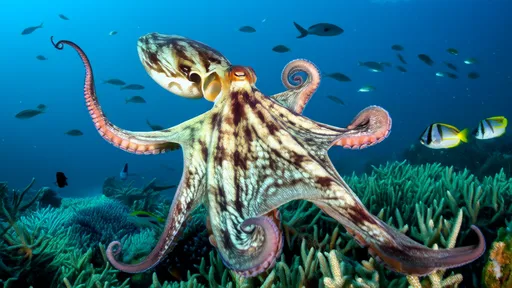
The ocean depths hold countless mysteries, but few creatures embody the art of deception quite like the mimic octopus. This eight-armed maestro of transformation doesn't merely change color - it performs an elaborate theatrical production, impersonating venomous sea snakes, floundering flatfish, and even deadly lionfish with such precision that marine biologists initially mistook its performances for entirely different species.
Animal

Gliding Flying Lizard: A Parachute Supported by Ribs

By /Jul 7, 2025

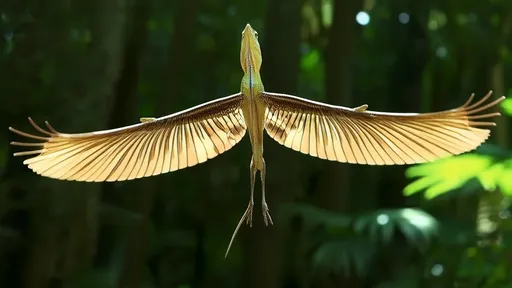
The skies have always been a realm dominated by birds and insects, but nature occasionally throws in a surprise. Among these surprises is the remarkable flying lizard, a creature that defies conventional expectations of reptilian movement. Unlike its earthbound cousins, this agile reptile has evolved an extraordinary method of aerial locomotion—gliding through the air with the help of an extendable, rib-supported "parachute." This adaptation not only allows it to escape predators but also to traverse its forest habitat with astonishing efficiency.
Animal

Saharan Silver Ants: Speedy Walkers Tolerant to 70°C Heat

By /Jul 7, 2025

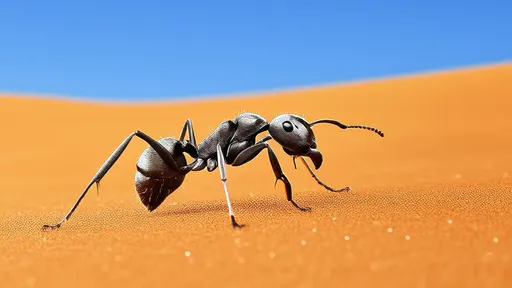
The Sahara Desert is one of the harshest environments on Earth, with scorching temperatures that can exceed 50°C (122°F) during the day. Yet, amidst this unforgiving landscape, a tiny insect thrives where most creatures would perish—the Saharan silver ant (Cataglyphis bombycina). These remarkable ants have evolved extraordinary adaptations that allow them to endure extreme heat, move at blistering speeds, and forage in conditions that would be lethal to almost any other animal.
Animal

Ice Worm Antifreeze Proteins: Active Life in Zero-Degree Ice Gaps

By /Jul 7, 2025

In the frozen crevasses of glaciers and the subzero landscapes of polar regions, a remarkable biological phenomenon thrives where most life would perish. The discovery of antifreeze proteins (AFPs) in ice worms – small, dark-colored annelids that make their homes in glacial ice – has revolutionized our understanding of how organisms adapt to extreme cold. These humble creatures, no longer than a matchstick, contain biochemical secrets that could transform medicine, food preservation, and even space exploration.
Animal

Burial Beetle Antiseptic: A Corpse Preparation that Inhibits Fungi

By /Jul 7, 2025

The natural world is full of hidden marvels, and among them, the burial beetle stands out as an unlikely undertaker with a surprising talent. These insects, often overlooked in the grand tapestry of life, possess an extraordinary ability to preserve their prized possessions—carcasses meant for their offspring. What makes this process even more fascinating is how they inadvertently create a fungal-resistant environment, a phenomenon that could hold clues for human applications.
Animal

Archerfish Sniper: Master of Water Droplet Trajectory Calculation

By /Jul 7, 2025

In the lush mangrove forests of Southeast Asia, an unassuming predator performs ballistic calculations that would make a military sniper envious. The archerfish (Toxotes jaculatrix) has mastered the art of shooting down prey with precision water jets – a hunting technique that combines physics, physiology, and evolutionary ingenuity. These aquatic marksmen can hit targets up to 2 meters above the water's surface with millimeter accuracy, compensating for light refraction, gravity, and even moving targets.
Animal

Water Rail's Lightness: The Water Surface Walker of Floating Plants"

By /Jul 7, 2025

In the lush wetlands of tropical and subtropical regions, a delicate ballet unfolds daily upon floating lily pads. The jacana, often dubbed the "lily-trotter" or "Jesus bird" for its miraculous ability to walk on water, is nature’s answer to the concept of lightweight engineering. With their disproportionately long toes and feather-light bodies, these birds defy gravity, skimming across aquatic vegetation as if defying the very laws of physics.
Animal

Opossum Playing Dead: A Life-Saving Mechanism Triggering Shock State

By /Jul 7, 2025

The animal kingdom is full of bizarre survival strategies, but few are as dramatic – or as poorly understood – as the opossum's ability to play dead. When threatened, these marsupials don't just freeze or flee; they enter a shock-like state so convincing that predators often lose interest entirely. This phenomenon, called thanatosis, isn't mere theater – it's a complex physiological response that essentially shuts down the opossum's body to avoid becoming someone's dinner.
Animal

Anglerfish Lure: The Evolution of Deep-Sea Fishing Lights

By /Jul 7, 2025

The depths of the ocean have always held mysteries that challenge human ingenuity, and perhaps no creature embodies this enigma more strikingly than the anglerfish. With its grotesque appearance and bizarre bioluminescent lure, this deep-sea predator has inspired centuries of fascination—and more recently, revolutionary advancements in fishing technology. The evolution of deep-sea fishing lights from primitive torches to sophisticated LED systems mirrors our growing understanding of marine ecosystems, while simultaneously borrowing tricks from nature’s own playbook.
Animal

Bee Ultraviolet Vision: The Secret of Flower Navigation Maps

By /Jul 7, 2025

The natural world is full of wonders that often escape the human eye, and one of the most fascinating examples is the ultraviolet (UV) vision of bees. While humans perceive flowers in a limited spectrum of colors, bees see a hidden world of patterns and signals invisible to us. This extraordinary ability plays a crucial role in pollination, guiding bees to nectar with remarkable precision. The secret lies in the intricate UV markings on petals, which act as nature’s own navigation system.
Animal

Bat Doppler Compensation: Echolocation Calibration in Flight

By /Jul 7, 2025

In the dimly lit world of echolocating bats, a remarkable biological sonar system operates with precision that puts human engineering to shame. These nocturnal creatures have evolved an elegant solution to a complex physics problem—how to maintain accurate echo perception while moving at high speeds. The phenomenon, known as Doppler shift compensation, reveals nature's ingenuity in calibrating flight navigation systems in real-time.
Animal

Canine Olfactory Mucosa: 300 Million Receptors Analyzing the World

By /Jul 7, 2025

The canine olfactory system represents one of nature’s most sophisticated biological detection tools, capable of interpreting chemical signatures at concentrations nearly 100 million times lower than what humans can perceive. At the heart of this extraordinary ability lies the olfactory mucosa—a specialized tissue lining the nasal cavity—packed with approximately 300 million scent receptors. To put this into perspective, humans possess a mere 5 to 6 million olfactory receptors. This staggering difference isn’t just quantitative; it reflects an evolutionary adaptation that has allowed dogs to navigate and interpret the world through an olfactory lens far beyond human comprehension.