Antarctic Fermentation: Yeast Hibernating at -50°C

Jul 11, 2025 By

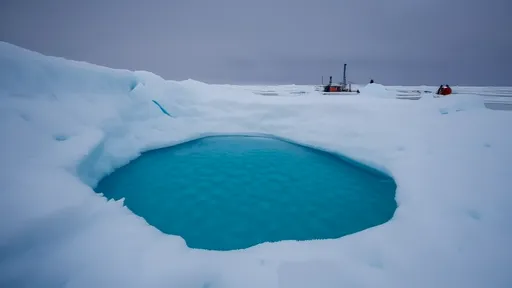
In the frozen expanse of Antarctica, where temperatures plunge to a bone-chilling -50°C, life seems an impossible feat. Yet, beneath the icy surface, a microscopic marvel defies the odds—yeast. These resilient organisms enter a state of suspended animation, a biological hibernation that allows them to survive in one of Earth's most inhospitable environments. Scientists are now unraveling the secrets of this survival strategy, which could hold implications for everything from astrobiology to food preservation.

The discovery of yeast thriving in Antarctica's extreme cold challenges our understanding of microbial life. Unlike their counterparts in temperate regions, these cold-adapted yeasts have evolved unique biochemical mechanisms to endure prolonged freezing. Their cells produce specialized proteins and sugars that act as natural antifreeze, preventing the formation of lethal ice crystals. This adaptation is not just about survival; it’s a masterclass in metabolic innovation.

What makes these yeasts particularly fascinating is their ability to "wake up" when conditions improve. Unlike many organisms that perish in extreme cold, Antarctic yeast can remain dormant for years, only to resume metabolic activity when temperatures rise slightly. This ability to toggle between active and dormant states has piqued the interest of researchers studying long-term survival in extreme environments, including space.

The implications of this research extend far beyond polar biology. Understanding how yeast survives such extreme conditions could revolutionize how we preserve food, medicines, and even genetic material. Traditional freezing methods often damage cellular structures, but learning from these microbes might lead to breakthroughs in cryopreservation. Imagine a future where perishable goods can be stored indefinitely without loss of quality, thanks to lessons from a microscopic Antarctic survivor.

Another tantalizing possibility lies in astrobiology. If yeast can endure Antarctica's deep freeze, could similar organisms exist on icy moons like Europa or Enceladus? The study of Antarctic yeast provides a terrestrial analog for extraterrestrial life, offering clues about how biology might persist in the frozen reaches of our solar system. This research bridges the gap between Earth's extremes and the potential for life beyond our planet.

Yet, the story of Antarctic yeast is also one of fragility. As climate change alters polar environments, these specialized microbes face an uncertain future. Warmer temperatures could disrupt their delicate balance, pushing them beyond their evolutionary limits. Scientists are racing to study these organisms before their habitats transform irreversibly, preserving not just the yeasts themselves but the secrets they hold.

The resilience of Antarctic yeast is a testament to life's tenacity. In the silence of the ice, these tiny organisms whisper a profound truth: life finds a way, even in the most unforgiving corners of our world. As research continues, their story may well rewrite our understanding of survival, adaptation, and the very limits of life itself.

Recommend Posts
Food

Colloidal Metaverse: Bloom Strength Values of Jelly Elasticity

By /Jul 11, 2025

The concept of Colloidal Metaverse has recently taken the scientific and tech communities by storm, particularly with its intriguing intersection of material science and virtual reality. One of the most fascinating aspects of this emerging field is the study of jelly-like elasticity and its quantification through the Bloom Strength Value. This metric, traditionally used in food science to measure the firmness of gels, has found unexpected relevance in the design of virtual environments where tactile feedback and material realism are paramount.
Food

Flavor Courier: Edible Pheromone Delivery System

By /Jul 11, 2025

The concept of edible pheromone delivery systems might sound like science fiction, but it is rapidly becoming a tangible reality in the fields of food technology, agriculture, and even human communication. These systems harness the power of naturally occurring chemical signals—pheromones—to convey information between organisms, but with a twist: they are designed to be safely consumed. The implications are vast, from enhancing crop yields to revolutionizing how we experience food and beverages.
Food

Magnetic Gustation: Illusory Saltiness Modulated by Magnetic Fields

By /Jul 11, 2025

For centuries, taste has been understood as a purely biochemical phenomenon—a dance of molecules binding to receptors on our tongues. But recent breakthroughs in neurogastronomy are challenging this dogma, revealing an astonishing truth: magnetic fields can directly manipulate our perception of flavor, particularly saltiness. This phenomenon, dubbed "electromagnetic gustation," opens doors to futuristic applications ranging from low-sodium diets to immersive dining experiences.
Food

Flavor Digital Library: Binary Decoding of Olfactory Molecules

By /Jul 11, 2025

The human nose can distinguish between trillions of odors, yet the language of scent remains one of nature's most enigmatic codes. In laboratories around the world, researchers are pioneering a radical new approach to olfaction—translating the intricate dance of aroma molecules into binary data. This emerging field, known as digital flavor libraries or odor digitization, could revolutionize industries from perfumery to artificial intelligence.
Food

Cell Factory: Cultivation of Plant-Based Steak Myofibrils

By /Jul 11, 2025

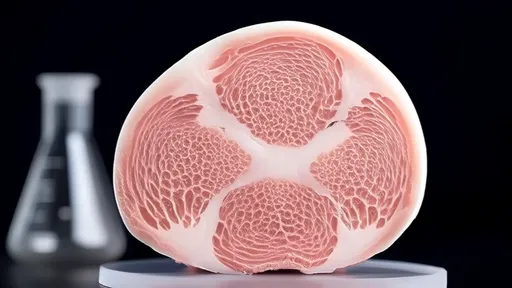
The food technology sector is undergoing a revolutionary transformation as scientists and startups pioneer methods to create authentic-tasting plant-based meats through cellular agriculture. Among the most challenging and promising developments is the cultivation of muscle fibers that replicate the texture and mouthfeel of traditional steak – without animal slaughter.
Food

Xinjiang Melons and Fruits: Sugar Compression Due to Diurnal Temperature Difference

By /Jul 11, 2025

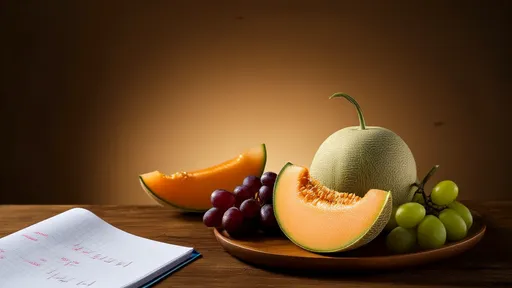
The vast, sun-drenched landscapes of Xinjiang have long been celebrated for producing some of the world’s most succulent fruits. From honey-sweet Hami melons to crisp, juice-laden grapes, the region’s agricultural output thrives under a unique climatic alchemy—intense sunlight paired with dramatic diurnal temperature shifts. This phenomenon, often overlooked in global discussions about terroir, is the secret behind Xinjiang’s unparalleled fruit quality. The science is as elegant as it is brutal: daylight hours bathe crops in photosynthetic energy, while nighttime cold snaps force plants to conserve resources, concentrating sugars into a symphony of flavor.
Food

Jiangnan Spring Bamboo Shoots: Water Absorption and Expansion Rate of Rhizomes

By /Jul 11, 2025

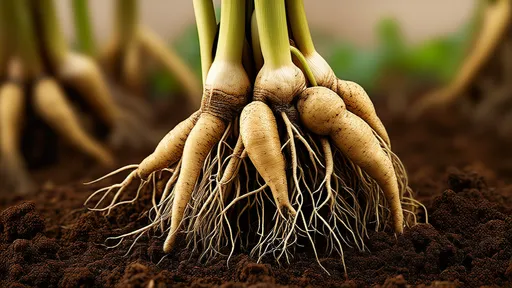
The bamboo forests of Jiangnan have long captivated botanists with their silent hydraulic marvel—the explosive growth of spring shoots fueled by an intricate water-pumping mechanism. Recent studies reveal how Phyllostachys edulis employs its subterranean rhizome networks as biological pipelines, achieving pressures that rival industrial systems.
Food

Jinhua Pig Intermuscular Fat: The Temperature Gene of Snowflake Texture

By /Jul 11, 2025

The Jinhua pig, a prized breed native to China's Zhejiang province, has long been celebrated for its exceptional meat quality, particularly the intricate marbling of intramuscular fat that creates its signature "snowflake"纹理. Recent breakthroughs in genetic research have uncovered the fascinating temperature-dependent mechanisms behind this unique fat distribution, shedding light on why this breed stands apart in the world of gourmet pork.
Food

Chaoshan Fish Sauce Tank: Salt Gradient Osmotic Pressure Model

By /Jul 11, 2025

The centuries-old tradition of Teochew fish sauce fermentation represents one of humanity's most ingenious food preservation techniques, harnessing the power of salt gradients and osmotic pressure to transform humble marine ingredients into complex umami-rich condiments. This biochemical alchemy, perfected through generations of Chaozhou artisans along China's southeastern coast, operates on principles that modern science is only beginning to fully comprehend. At the heart of this process lies an elegant dance between microbial ecology and physical chemistry, where controlled decomposition meets precise mineral balance.
Food

Soybean Nitrogen Fixation in Northeast China: The Protein Factory of Black Earth

By /Jul 11, 2025

The vast black soil regions of Northeast China have long been celebrated as the country's breadbasket, but their lesser-known role as a protein factory is quietly reshaping agricultural narratives. Beneath the sprawling soybean fields lies a remarkable ecological partnership – one where plants and bacteria collaborate to convert atmospheric nitrogen into life-sustaining proteins. This natural nitrogen fixation process makes soybeans not just a crop, but a sustainable protein production system that could hold answers to global food security challenges.
Food

Volcanic Stone Grill: Basalt Heat Retention Efficiency Leaderboard

By /Jul 11, 2025

The volcanic stone grill industry has witnessed a groundbreaking shift with the emergence of basalt as the premier material for heat retention. Known for its dense composition and natural thermal properties, basalt has become the gold standard for chefs and grill enthusiasts seeking consistent, high-temperature cooking surfaces. Unlike conventional materials, basalt's ability to absorb and radiate heat evenly has revolutionized the way we approach stone-grilled cuisine.
Food

Desert Dry Mature: Wind Erosion Equation of Camel Meat Dehydration

By /Jul 11, 2025

The vast deserts, with their relentless winds and scorching sun, have long been a crucible for unique culinary traditions. Among these, the practice of drying camel meat through natural wind erosion stands as a testament to human ingenuity in harsh environments. This ancient method, known as "desert dry-aging," transforms raw camel meat into a preserved delicacy through a combination of atmospheric conditions and time. The resulting product—chewy, intensely flavored, and rich in nutrients—has sustained nomadic cultures for centuries and now garners interest from gourmets and food scientists alike.
Food

Antarctic Fermentation: Yeast Hibernating at -50°C

By /Jul 11, 2025

In the frozen expanse of Antarctica, where temperatures plunge to a bone-chilling -50°C, life seems an impossible feat. Yet, beneath the icy surface, a microscopic marvel defies the odds—yeast. These resilient organisms enter a state of suspended animation, a biological hibernation that allows them to survive in one of Earth's most inhospitable environments. Scientists are now unraveling the secrets of this survival strategy, which could hold implications for everything from astrobiology to food preservation.
Food

Space Crispness: The Mechanics of Chip Fracture in Zero Gravity

By /Jul 11, 2025

The concept of "space crispness" might sound like science fiction, but it’s a very real area of scientific inquiry. Researchers have turned their attention to the peculiar behavior of potato chips in microgravity environments, leading to fascinating discoveries in fracture mechanics. The study of how snacks break—or fail to break—when gravity is no longer a dominant force has implications far beyond snack food. It touches on material science, structural engineering, and even space mission planning.
Food

Deep-sea Pressure Cooker: The Boiling Point Conundrum at 3700 Meters Below

By /Jul 11, 2025

The ocean's abyss holds mysteries that challenge even the most advanced scientific understanding. Among these enigmas lies a peculiar culinary conundrum: how does water boil at 3700 meters below sea level? This question isn't merely academic—it has real implications for deep-sea exploration, marine biology, and even submarine cooking.
Food

Pottery Congee Fossil: Neolithic Starch Granule Detection

By /Jul 11, 2025

In a groundbreaking discovery that sheds light on the culinary practices of our Neolithic ancestors, researchers have identified traces of what appears to be the world's oldest known porridge. The finding comes from meticulous analysis of starch grains preserved in the crevices of ancient pottery fragments, specifically from a type of cooking vessel known as a Tao Li - a distinctive tripod pottery used extensively during China's Neolithic period.
Food

Dinner with Ice Corpses: Alpine Stomach Contents Cookbook

By /Jul 11, 2025

The discovery of the Iceman, affectionately known as Ötzi, in the Ötztal Alps in 1991 was a watershed moment for archaeology. Among the many revelations his remarkably preserved body offered, perhaps none is as intriguing as the contents of his stomach. The last meal of this Copper Age man, consumed over 5,300 years ago, provides a fascinating glimpse into the diet, lifestyle, and even the environmental conditions of his time. Scientists have meticulously analyzed the stomach contents, revealing a menu that is both surprising and telling. This "Alpine stomach contents recipe" not only sheds light on Ötzi’s final hours but also opens a window into the culinary habits of our ancient ancestors.
Food

Millennial Honey Pot: The Eternal Sweetness of Pharaoh's Tomb

By /Jul 11, 2025

Deep within the labyrinthine passages of Egypt's pyramids, archaeologists have uncovered a substance so enduring it defies the very concept of time. Amidst golden sarcophagi and hieroglyphic inscriptions, clay pots filled with honey – still edible after three millennia – stand as silent witnesses to humanity's oldest love affair with sweetness. These ancient jars, discovered in pharaonic burial chambers, contain honey that retains not only its physical form but remarkably, its flavor and nutritional properties.